Three consulting engagements, described at the level of what was asked, what
was built and what was handed over, followed by the software and product projects Dante has
designed and built himself.
Client case studies
Client data, results and findings stay with the client. What is described here
is the problem each engagement addressed and the work delivered against it.
Select Immunogenomics
T-cell receptor repertoire and immune profiling
Question
Reading an immune repertoire normally means dedicated deep sequencing, which is
expensive at the scale and sample quality a program actually has on hand. Select
Immunogenomics was already generating targeted expression data for other purposes, and
the question was how much repertoire information could be recovered from it.
Work
We developed methods for estimating TCR diversity from targeted expression data and
benchmarked the available reconstruction tools (TRUST, MiTCR and MiXCR) against each
other, then compared the resulting measurements across targeted panels, RNA-seq and
sequencing-based methods. An inferred measurement is only useful if you know when it
holds, so a good share of the work went into quality control: procedures built on tumor
samples, PBMCs and cell-line mixtures, and an assessment of concordance and robustness
across sample types and platforms.
Deliverables
The estimation methods and the benchmarking code, the cross-platform concordance
assessment, and the quality-control criteria defining the conditions under which the
estimates are usable.
GeneCentric
Preclinical oncology analysis, reporting and reproducibility
Question
A preclinical program re-cuts the same in-vivo dataset every couple of weeks as new
experimental data arrives. The analysis came back each round as a long PDF, which made
two ordinary questions hard to answer: what changed since last time, and which script
drew this figure.
Work
The analysis side covered survival and tumor-growth modeling for patient-derived
xenograft studies (Kaplan–Meier, Cox proportional hazards, per-subgroup interaction
forest plots), expression quality control, and gene signatures derived from the
experiments and scored against public cohorts. Around it we built a containerized
pipeline and a report generator, and inventoried the raw sequencing behind the program
across vendors and storage buckets so that any model could be traced back to its
FASTQs.
Deliverables
The containerized pipeline, a report generator that emits both a full report and a
changes-only edition with every figure stamped with its date, its reviewer comment and
the path of the script that produced it, and the sequencing inventory.
Reveal Genomics
Independent implementation and benchmarking for molecular diagnostics
Question
Reveal Genomics wanted their breast-cancer prognostic assay implemented a second time
by someone outside the team, working from the specification rather than from their
code, so that the computation could be compared against an independent account of
it.
Work
We reimplemented the gene-expression signature and risk-score computation from the
specification and compared the two implementations, then measured how the signature
calculations respond when genes are missing from the input. A second line of work
benchmarked their shallow whole-genome sequencing analyses: tumor-fraction estimation
and copy-number signatures across paired plasma and tumor samples.
Deliverables
A second implementation with a documented account of where the two agree numerically,
where they diverge, and how sensitive the scores are to missing input. This establishes
computational agreement between two implementations of the same specification; it is not
a clinical validation of the assay, and does not speak to its clinical performance.
Software and founder projects
Selected software and product projects, showing Dante’s work in data
modeling, controls, and practical product design. SubTyper is an in-house Sabragen project.
Dawnward and DoDones are Dante’s own ventures and are not Sabragen engagements.
SubTyper
In-house Sabragen project · ran 2017–2024 ·
subtyper.com is currently offline
Biology is full of part-of and kind-of relationships that nobody has written down in one
place. What belongs to what, under which definition, on whose evidence: it lives across
thousands of papers, and every lab rebuilds the same mental map without being able to hand
it to anyone else.
SubTyper is an interactive platform that makes those relationships explicit and
traceable. It holds a crowd-sourced knowledge web of subtype and part-of relationships,
built so that each claim carries its source rather than floating free. Organizations could
assemble and share their own webs, display them on SubTyper.com, link their own content
into them, or embed them in any site.
Dante designed the data model and the interface and built the platform himself. It ran
from 2017 to 2024. The site is not currently serving the application, so the recorded
walkthrough below is the way to see it working. If you have a body of relationships you
would want represented this way, we would like to
hear about it.
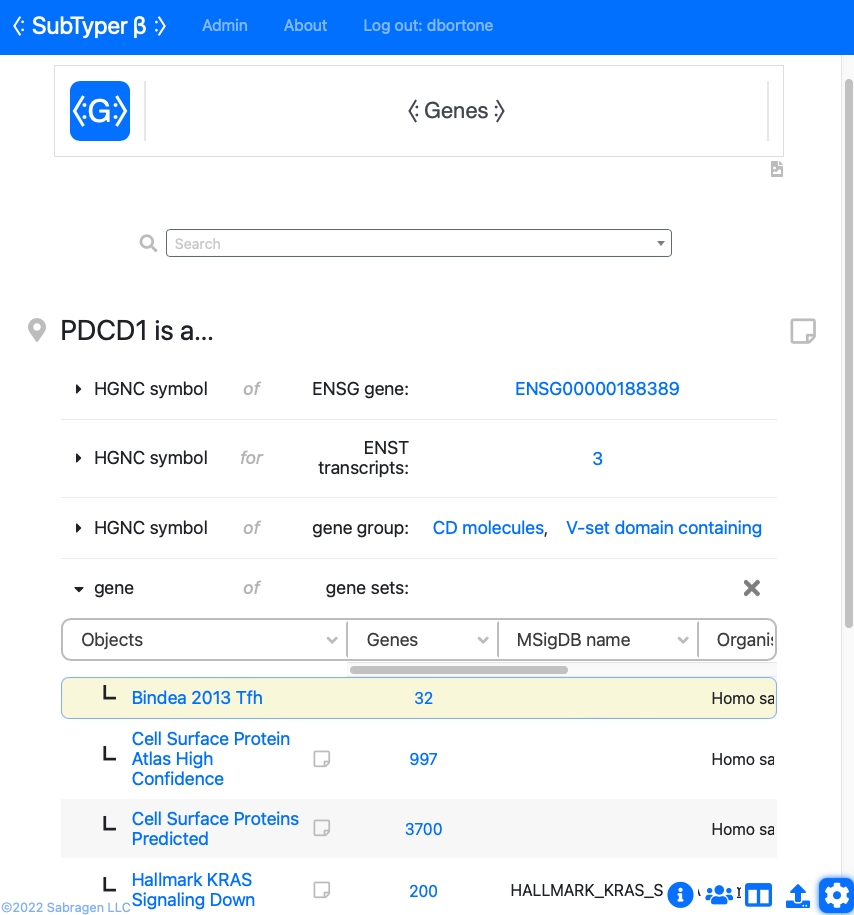
The SubTyper interface: a knowledge web of subtype and part-of
relationships.
Dante’s own venture, not a Sabragen engagement · prototype
· dawnward.co
Pointing panels at the sun through the day instead of bolting them down facing one
direction raises yield, but conventional trackers need ground mounts, poured concrete and
acreage. That rules out renters, small farms, and anyone who doesn’t own the dirt the
mount would stand in.
Dawnward is an overhead tensile-actuated solar tracking system: the array hangs from
structures that already exist and follows the sun on cables rather than on a pier sunk into
the ground. Dante took it from concept through prototype, writing the control software and
the embedded systems, and is the sole inventor on the issued patent
(US 12,348,180 B1, issued
1 July 2025).
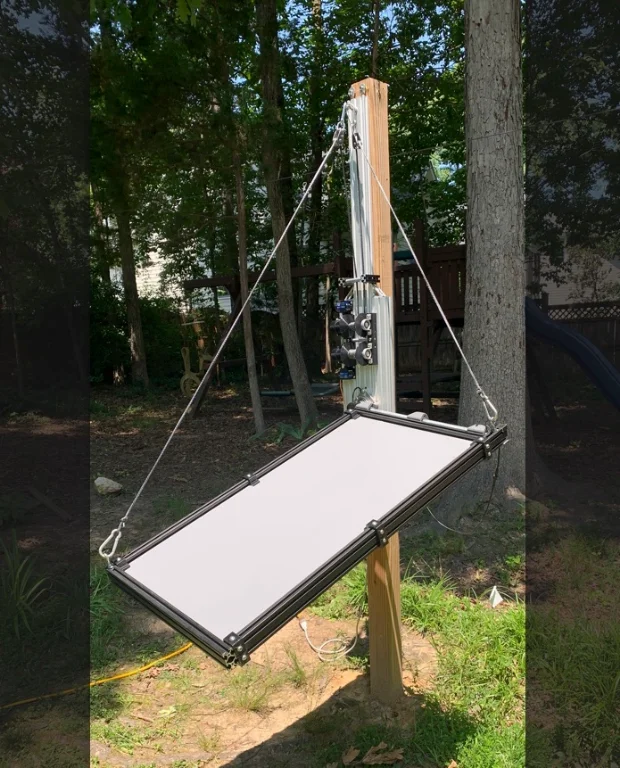
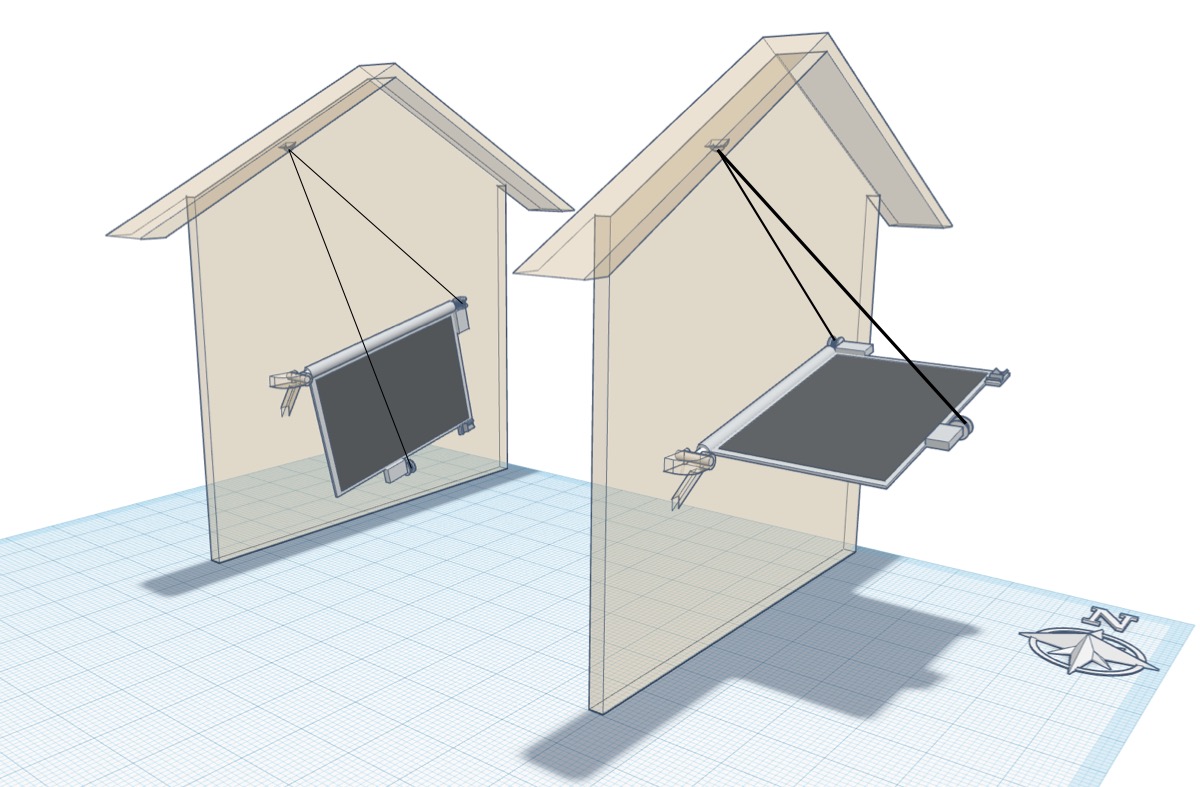
The prototype, with the actuator and control hardware on the mast.Design render of the intended mounting: suspended from an existing
structure, changing angle through the day. Image from
dawnward.co.
Status: working prototype; patent issued 2025.
DoDones
Dante’s own venture, not a Sabragen engagement ·
dodones.com
Getting a five-year-old through a morning routine usually means an adult narrating the
same sequence every day. Charts and sticker systems track whether it happened; they
don’t hand the child the sequence itself.
DoDones are printed task frames with a slide cover, so a child sees one step at a time and
covers it when it is finished. Dante designed the physical frames and built the web editor
that generates printable task cards, along with the site that distributes them.
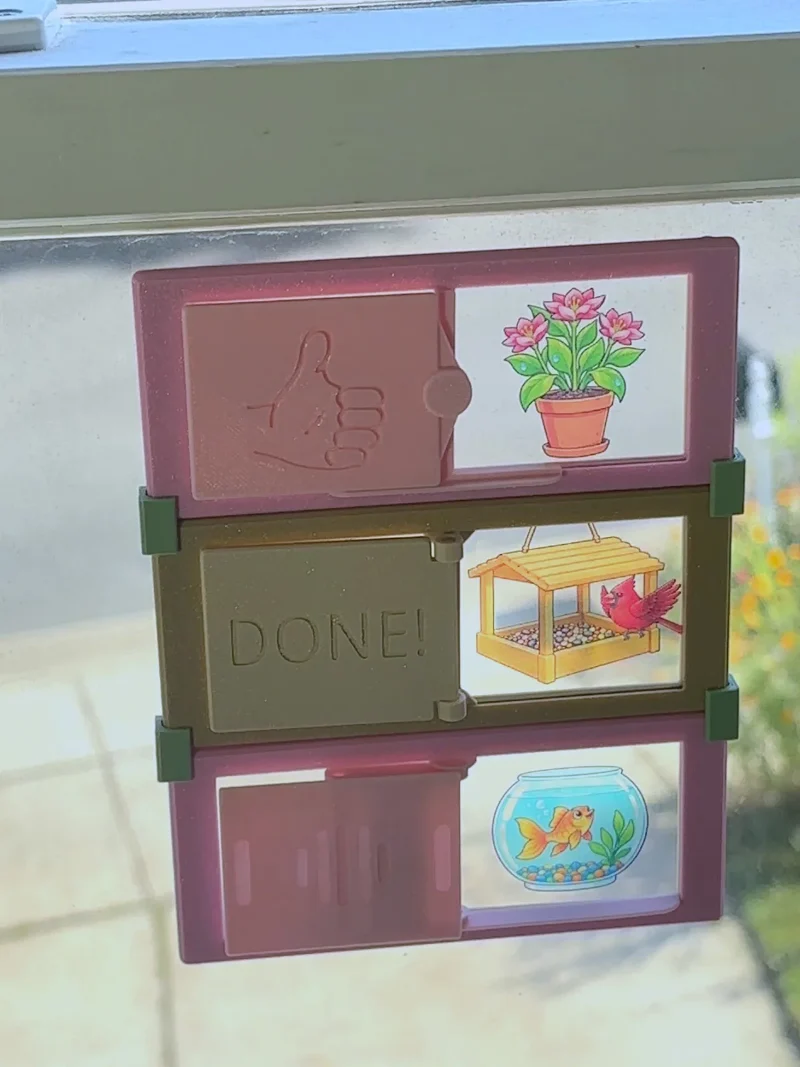
Three frames in use: the cover slides aside to show the next step and
closes over it when the step is finished. Photo from
dodones.com.
Status: free printables and the web editor are live; the shop is not open
yet.
Discuss your project
Tell us the scientific question, the data you have,
and your timeline. We can discuss the analysis and the deliverables your team needs.